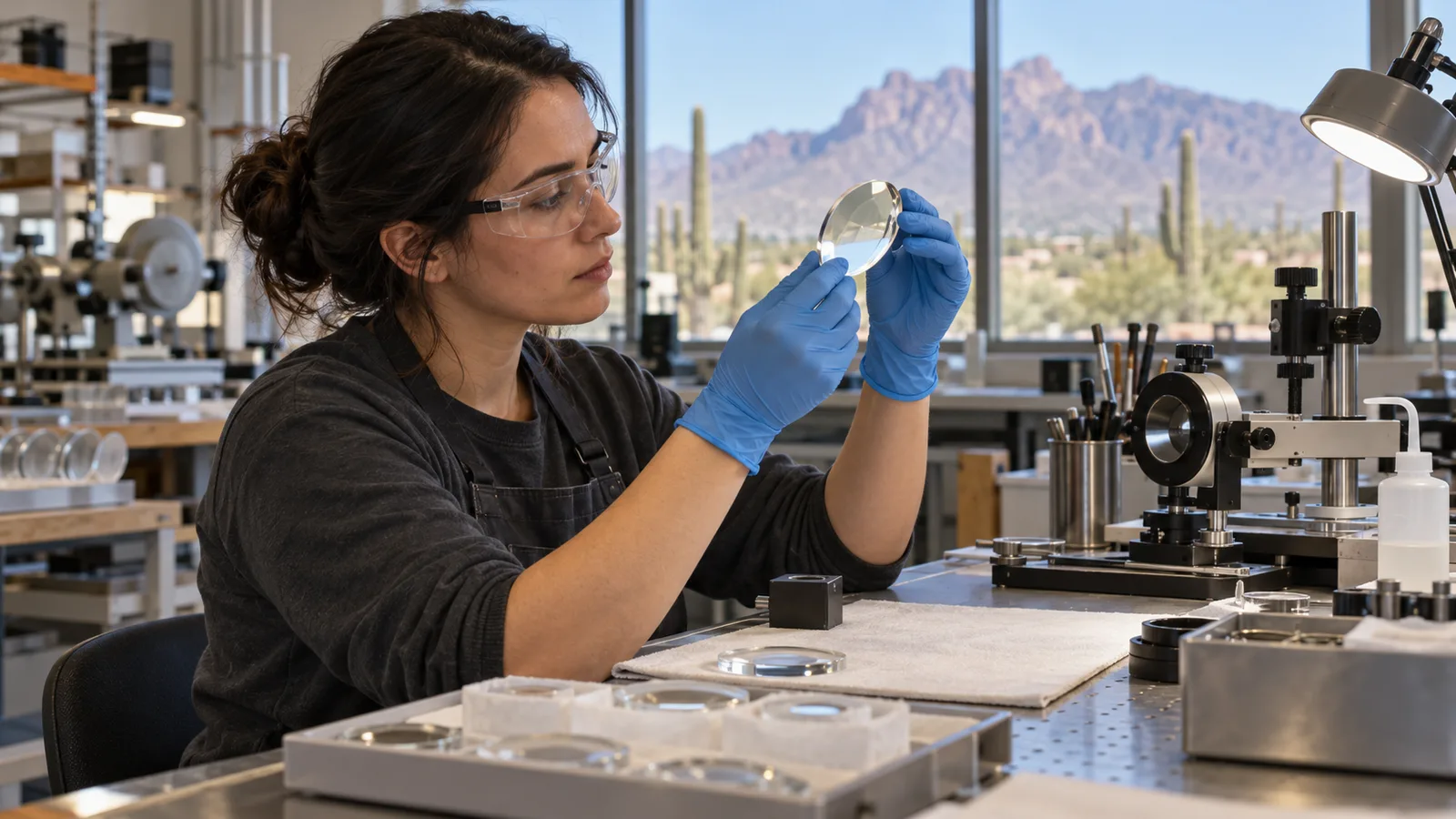
Tucson has an established optics industry, but the sale case still starts with your own business records. Tucson Business Brokers Office connects seller inquiries with an independent valuation partner.
What capability is actually being sold?
Describe the work your team performs: fabrication, coatings, assembly, testing or another defined process. Distinguish equipment capacity from capabilities that depend on one person.
Identify who owns the designs, procedures and software used in production. Customer material does not automatically become an asset you can sell or share. Review confidentiality and intellectual property terms.
Make technical continuity part of preparation
A buyer will want to understand how you train staff, validate work and handle rework. Keep the explanation specific to your shop. Do not claim certifications or approvals that the business does not hold.
- Revenue and margins by product family or work type.
- Calibration, maintenance and process documentation.
- Technical staff responsibilities and succession gaps.
- Contract, customer approval and information access restrictions.
Treat protected information carefully
Start with a general description and revenue band. Do not upload technical drawings or restricted customer details to a public form. Your advisers can establish what may be disclosed, to whom and under which conditions.
If customer programs are concentrated, show their history and renewal risk rather than assuming a new owner inherits the work unchanged.
Bring value back to supported earnings
Specialized equipment and skilled people contribute to the sale story, but neither substitutes for records of cash flow. Explain project timing, deposits, rework costs and any unusual revenue in the accounts.
Review resolve customer concentration before going to market and prepare equipment records for a business valuation before preparing the numbers.
You can also review precision machining sale questions or begin a valuation conversation with broad details.